Same Song, Different World: Why Your Groove Gets Lost Between the Room and the Screen
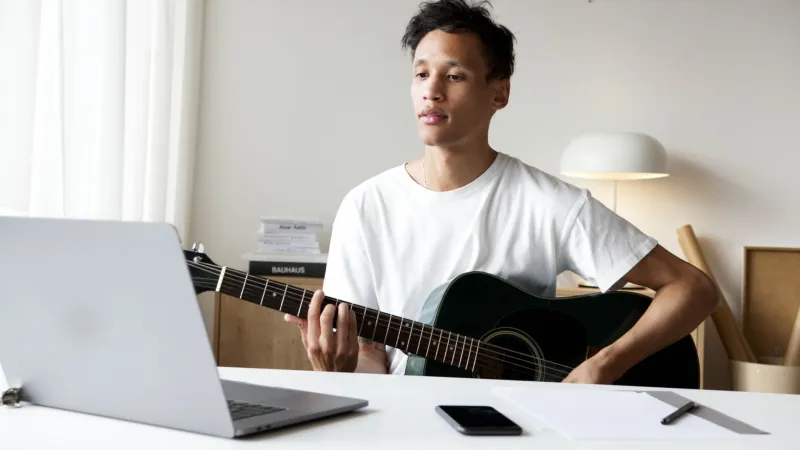
You've been there. A jam session at your buddy's place where everything just clicks—the rhythm locks in, the energy builds, and two hours feel like twenty minutes. Then, a week later, you try to recreate that magic on a digital platform, and suddenly the whole thing feels like a bad phone connection from 2003. The timing's off, someone keeps cutting out, and the groove you spent months building together has completely evaporated.
This isn't just in your head. The gap between how music feels in a room versus how it feels through a screen is real, measurable, and genuinely fascinating once you dig into the science behind it. More importantly, it's a gap you can actually close—with the right knowledge, tools, and a little patience.
The Invisible Wall: What Latency Actually Does to Your Playing
Latency is the villain of every online jam session, and most musicians don't fully understand what it's actually doing to their playing. In simple terms, latency is the delay between when you play a note and when the other person hears it. Even a delay of 30 to 50 milliseconds—less than a blink—is enough to throw off your rhythmic instincts.
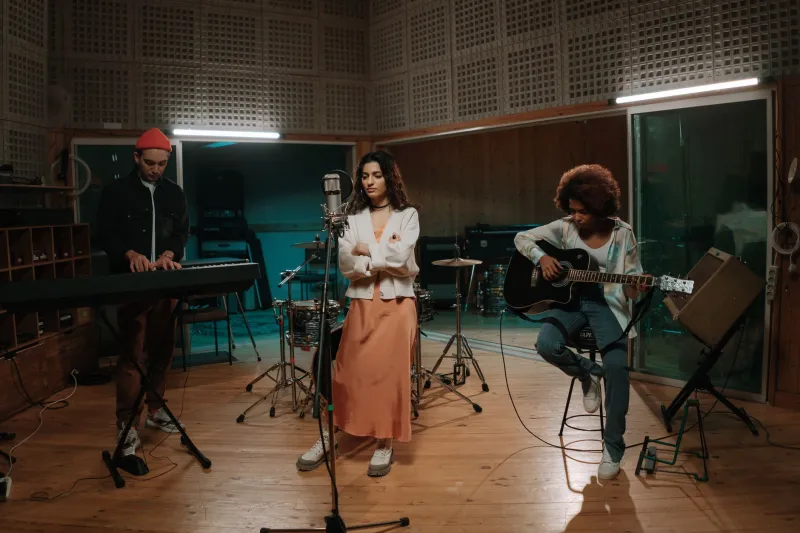
Here's why that's such a big deal: when you're playing in person, your brain is constantly using tiny timing signals from everyone around you to stay in sync. You hear the drummer's snare hit and feel it in your chest and see their stick come down—all at essentially the same moment. Your nervous system knits all of that together into a seamless groove.
Online, those signals arrive at different times, in different qualities, or not at all. Your brain is trying to play rhythm Jenga with pieces that don't quite fit. No wonder it feels off.
According to music cognition researchers, the human ear can detect timing discrepancies as small as 10 to 20 milliseconds. Professional audio engineers typically consider anything above 30ms of round-trip latency to be problematic for real-time musical interaction. Most standard video calls run somewhere between 100 and 200ms. Do the math, and it's obvious why your online sessions don't feel like your in-person ones.
The Stuff Nobody Talks About: Visual Cues and Audio Quality
Latency gets all the attention, but it's only part of the story. Two other factors quietly sabotage online music-making: compressed audio and the loss of visual communication.
Platforms like Zoom and FaceTime are designed to carry voices clearly, not full-frequency musical sound. They apply aggressive compression and filtering that strips out the low-end warmth, the high-end shimmer, and the natural dynamics that make music feel alive. What you're hearing through those platforms is essentially a musical caricature—recognizable, but flat.
Then there's the visual piece. In a live setting, musicians are constantly reading each other through nods, body sways, eye contact, and the almost unconscious mirroring that happens when people share physical space. A guitarist leans into a chord change; the drummer sees it and adjusts. A singer takes a breath; the bassist knows a phrase is ending. These micro-signals happen faster than conscious thought, and they're almost entirely lost when you're staring at a pixelated grid of faces on a laptop screen.
Bridging the Gap: Practical Moves That Actually Work
Okay, so the odds are stacked against you. But musicians are nothing if not resourceful, and there are real strategies that experienced online collaborators swear by.
Get serious about your audio chain. This is the single biggest quality-of-life upgrade you can make. A dedicated USB audio interface—even a budget-friendly one like the Focusrite Scarlett Solo—makes an enormous difference in both the quality of sound you send and the clarity of what you receive. Pair it with a decent pair of studio headphones, and you're already playing a different game than the person using their laptop's built-in mic.
Use platforms built for musicians, not meetings. Tools like JamKazam, Jamulus, or the session features built into apps like Clapping Music are specifically engineered to minimize latency and preserve audio quality. They're not perfect, but they're a completely different experience from a standard video call. If you're serious about online collaboration, meeting your bandmates where the technology is actually designed to support you is non-negotiable.
Develop a click track culture. When visual cues are unreliable and latency is unavoidable, a shared metronome becomes your best friend. Agree on a tempo before you start, run a click in everyone's headphones, and use it as a common anchor. It takes some getting used to—especially if you're the kind of player who likes to breathe and push with the music—but it gives everyone a fixed reference point that the latency can't scramble.
Communicate more deliberately. Since those subtle physical cues are gone, you have to replace them with explicit signals. Designate someone to count in every section. Use chat or hand signals to flag transitions. Overcommunicate about song structure before you hit record. It feels awkward at first, but it quickly becomes second nature—and it often makes you a more intentional musician overall.
Embrace asynchronous collaboration. Not every musical partnership needs to happen in real time. Plenty of incredibly tight-sounding online collaborations are built by musicians trading stems—one person lays down a rhythm track, another adds a melody, a third adds harmony—each listening carefully to what came before. Apps designed around this workflow let you take your time, listen critically, and contribute your best playing without the pressure of a live connection.
The Silver Lining Nobody Expected
Here's the thing about struggling through the technical challenges of online music-making: it makes you a sharper player. When you can't rely on the room, the vibe, or the natural lock that happens when bodies share space, you're forced to develop a more precise internal sense of time. You listen more carefully. You make your intentions clearer. You become more adaptable.
Musicians who've spent serious time navigating both worlds often report that the discipline required for online sessions actually tightens up their live playing. The two environments aren't opposites—they're training grounds for each other.
The rhythm gap between live and online is real. But it's not a wall. It's more like a bridge that's still being built—and every musician who figures out how to cross it is helping lay down the next plank for everyone who comes after them.
So fire up your interface, plug in your headphones, and get back in the session. The groove is waiting on the other side.