Why the Best Friends You Haven't Met Yet Might Be in Your Next Online Jam Session
Here's a scenario that would have sounded bizarre ten years ago: Two people who live a thousand miles apart, have never shared a meal or a car ride or a conversation about the weather, consider each other close friends. They met in an online music session. They've never been in the same room. And yet when one of them had a rough week, the other was the first person they texted.
This isn't a rare story anymore. It's actually pretty common in communities built around collaborative music-making — and science is starting to explain why.
The Loneliness Problem Nobody Wants to Talk About
Let's be honest about where we're starting from. Loneliness in America has reached levels that public health officials are calling a crisis. We're more connected digitally than ever, and yet study after study shows people reporting fewer close friendships, less sense of community, and a persistent feeling of being unseen.
The usual prescription — join a club, volunteer, take a class — isn't wrong, exactly. But it misses something. Not all shared activities are created equal when it comes to building genuine connection. And it turns out that music might be in a category of its own.
What Music Does to Two Brains at Once
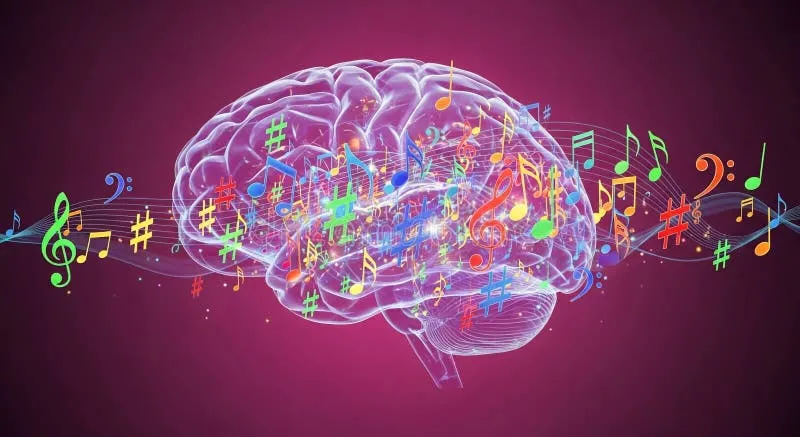
Researchers who study social bonding have found something consistently interesting about musical interaction: it synchronizes people in ways that go beyond the metaphorical. When people play music together — even simple rhythmic patterns — their neural activity starts to mirror each other. Their movements align. Their heartbeats can even start to converge.
This phenomenon, sometimes called entrainment, has been observed in everything from drum circles to orchestras. The remarkable part is that it doesn't seem to require physical proximity to kick in. Studies on remote musical collaboration have found that the synchronization effect still occurs, even with the slight delays and imperfections of playing over the internet.
Dr. Nina Kraus, a neuroscientist at Northwestern who has spent years studying how the brain processes music, has described musical experience as one of the most "biologically potent" activities humans engage in. It activates motor systems, emotional centers, memory networks, and social processing areas simultaneously. When you share that experience with another person, you're essentially giving them access to a lot of yourself at once.
Non-Verbal Trust Is Still Trust
One of the things that makes musical collaboration different from other online interactions is that so much of it happens without language. In a rhythm game or a live session, you're not explaining yourself — you're responding. You're listening and reacting. You're adjusting what you play based on what someone else just did.
That kind of responsiveness is actually one of the core components of trust-building, according to attachment researchers. The experience of being heard and responded to — even when "heard" means someone matched your rhythm or built on your chord — triggers the same neural pathways as more traditional forms of social validation.
Rachel, a 31-year-old elementary school teacher from Minneapolis, started playing in online rhythm game communities during the pandemic and describes the connection she felt with other players as almost immediate. "I couldn't tell you what these people looked like. I didn't know anything about their lives. But I knew how they played. I knew when they were being adventurous or when they were nervous. You learn a lot about someone from how they make music."
She and two people she met in those sessions now have a group chat that's active every day. One of them flew out to visit her last spring.
The Asynchronous Advantage
Real-time collaboration gets most of the attention, but there's a compelling case that asynchronous music-making — where one person lays down a track and another responds to it hours or days later — builds its own distinct kind of closeness.
When you add a part to something someone else created, you're engaging with their work thoughtfully, on your own time. You're not just reacting — you're considering. What did they mean by this? What would serve what they made? It's an act of attention and care that, over time, creates a real sense of intimacy.
Devin, a 27-year-old in Portland who's been active in collaborative music platforms for about three years, talks about this process almost like correspondence. "It's like writing letters, but in music. You put something out there, they respond, you respond back. After a while you've had this whole long conversation and you feel like you know this person."
His closest collaborator lives in Nashville. They've worked on over forty tracks together. They've also never met in person, though they're planning to change that at a music festival this fall.
Why These Bonds Tend to Stick
Social psychologists have long known that shared goals and shared struggles are among the most reliable ingredients for lasting friendship. Music collaboration checks both boxes. You're working toward something together — a finished track, a performance, a score you're proud of — and you're navigating the inevitable friction of creative differences, technical problems, and the occasional moment where something just isn't working.
The fact that creative vulnerability is involved makes the stakes feel higher, and the resulting bond feel more real. Sharing music you made — especially music that's still rough, still in progress — is an act of trust. When someone receives that generously and builds on it, something shifts.
Platforms that center rhythm and collaborative play create a particularly low-pressure environment for that kind of vulnerability. A rhythm game doesn't ask you to explain your influences or justify your choices. It just asks you to show up and play. And sometimes, showing up and playing with someone enough times is all it takes.
The Friends You Haven't Found Yet
If you're someone who's felt like adult friendships are just impossibly hard to make — and most Americans feel exactly that way — the research and the stories coming out of music communities offer something genuinely hopeful.
The conditions that make musical collaboration so uniquely bonding aren't going away. If anything, the tools for making music with people across distances are getting better, more intuitive, and more fun. The next person who becomes a real part of your life might be someone whose playing style you fall in love with before you ever learn their last name.
That's not a consolation prize for connection. For a lot of people, it's turned out to be the real thing.