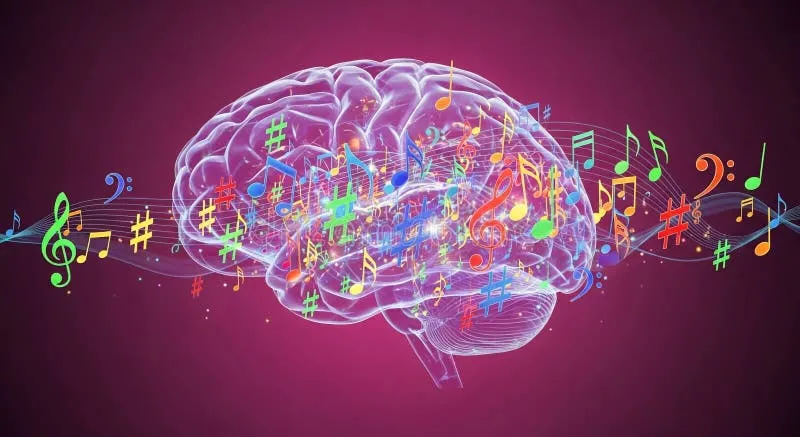
Forget the Playlist—Your Friends Are the New Entertainment: Inside the Collaborative Music Revolution
Somewhere between the 47th song on a carefully curated Spotify playlist and the third hour of background lo-fi beats, something quietly broke. Music—once a communal, living, breathing thing—had become wallpaper. Perfectly pleasant. Completely passive. And for a whole lot of people, especially those under 40, deeply unsatisfying.
What's filling that void is something that looks a lot less like consumption and a lot more like play.
Across the country, a cultural shift is picking up serious momentum. Millennials and Gen Z—the two generations most often blamed for "killing" industries they simply outgrew—are trading their listener status for something more active. They're not just watching music happen anymore. They're in it, building it, and doing it together.
The Algorithm Gave Us Everything Except Each Other
To understand why collaborative music creation is having such a moment, you have to understand what came before it. The streaming era delivered unprecedented convenience. Any song, any time, instantly. For a while, that felt like magic.
But convenience and connection are not the same thing. Research consistently shows that passive media consumption—scrolling, streaming, binging—tends to leave people feeling more isolated, not less. The pandemic made this obvious in the most uncomfortable way possible. Suddenly stuck at home, people realized that putting on a Spotify playlist was not actually a social experience, no matter how many friends you texted your "current mood" song to.
What people actually missed was participation. The sweaty concert crowd. The living room jam session where your roommate grabbed the acoustic guitar and everyone kind of knew the words. The friend group that argued passionately about whether a song had a good groove. Music as something you did, not just something that happened to you.
"There's a term in psychology called 'co-presence'—the feeling of genuinely being with someone," says a behavioral researcher who studies digital social dynamics. "Passive consumption creates almost none of it. But when you're making something together in real time, even digitally, co-presence spikes dramatically. That's what people are chasing."
Gen Z Didn't Abandon Music. They Reclaimed It.
It's tempting to frame this trend as a rejection of streaming, but that's not quite right. Younger listeners aren't abandoning Spotify or Apple Music—they're just adding something to the mix that those platforms were never designed to provide.
Gen Z, in particular, grew up watching music creation get demystified in real time. YouTube tutorials, GarageBand on a laptop, TikTok sounds built from scratch in a dorm room—the tools of music-making stopped feeling like things only "real" musicians had access to. That shift in perception changed everything.
"My generation doesn't really see a hard line between listener and creator," says Deja, a 22-year-old college student from Nashville who uses Clapping Music regularly with a group of friends spread across three different states. "Like, why would I just listen when I can actually be part of the song?"
That attitude is showing up in the numbers. Platforms centered on music creation and collaboration have seen dramatic user growth over the past three years. And the demographic doing the heaviest lifting isn't aspiring professionals—it's casual players who just want to make something with their friends.
The Living Room Jam Session Goes Digital
Clapping Music was built around exactly this instinct. The platform's collaborative features let players build rhythm patterns together, respond to each other's timing in real time, and create performances that genuinely require more than one person to pull off. It's not a solo experience dressed up in social clothing. It's fundamentally, structurally cooperative.
That design philosophy turns out to hit something real. Users consistently describe the platform not in terms of gaming or even music practice, but in terms of hanging out.
"It sounds corny, but it honestly feels like a jam session," says Trevor, a 31-year-old from Portland who plays with a group of college friends he rarely gets to see in person anymore. "We're not all musicians. Half of us couldn't tell you what a time signature is. But we're locked in together on this thing, and it's genuinely fun. It scratches an itch that Netflix just doesn't."
This is the part that tends to surprise people who haven't tried it: collaborative music creation doesn't require musical training to be deeply satisfying. The act of syncing up with another person—finding a shared groove, recovering from a stumble together, landing a tricky pattern in unison—produces a genuine emotional payoff that has almost nothing to do with technical skill.
There's even a name for it in musicology: "entrainment." It's the process by which two rhythmic systems synchronize with each other, and it triggers measurable neurochemical responses. Basically, locking into a beat with someone else just feels good in a way that's hardwired into us.
Post-Pandemic Appetite for Real Connection
The timing of this trend is not a coincidence. The years following the COVID-19 pandemic produced what social scientists have described as a widespread hunger for authentic, participatory experiences. People didn't just want to be entertained—they wanted to matter in the moment. They wanted their presence to make a difference.
Spectator entertainment, however polished, can't offer that. A collaborative music session can. When you drop out of the rhythm, your friends notice. When you nail a difficult pattern, the whole group benefits. You are not a passive receiver—you are a necessary part of the thing.
This mirrors trends happening across entertainment broadly. Escape rooms. Social cooking classes. Improv nights. Trivia leagues. The common thread isn't the activity—it's the structure of doing something together where everyone's participation shapes the outcome.
Collaborative music platforms are the digital version of that same impulse, and they have one significant advantage over most of those alternatives: you can do them from your couch, with people who live a thousand miles away.
Where This Is All Headed
If the trajectory holds, collaborative music creation isn't a niche trend—it's a preview of where entertainment is going. The passive consumption model that dominated the 2010s is showing its limits. What comes next looks a lot more interactive, a lot more social, and a lot more musical.
Platforms like Clapping Music are positioned right at the intersection of those forces. The tools are getting better, the community is growing, and the cultural appetite for participatory experiences isn't going anywhere.
The playlist was never going to be enough. Turns out, what we actually wanted was to play.
So grab your friends, find your groove, and make something. The algorithm will still be there when you're done—but we're guessing you won't miss it much.